
Richardson Garage Door Guide
Is Your Richardson Garage Door Worth Fixing, or Time to Replace?
Richardson homes mostly date from the 1970s to 2000s. Here's how to tell if your garage door's original hardware is still worth repairing or replacing today.
How Local Conditions Play In
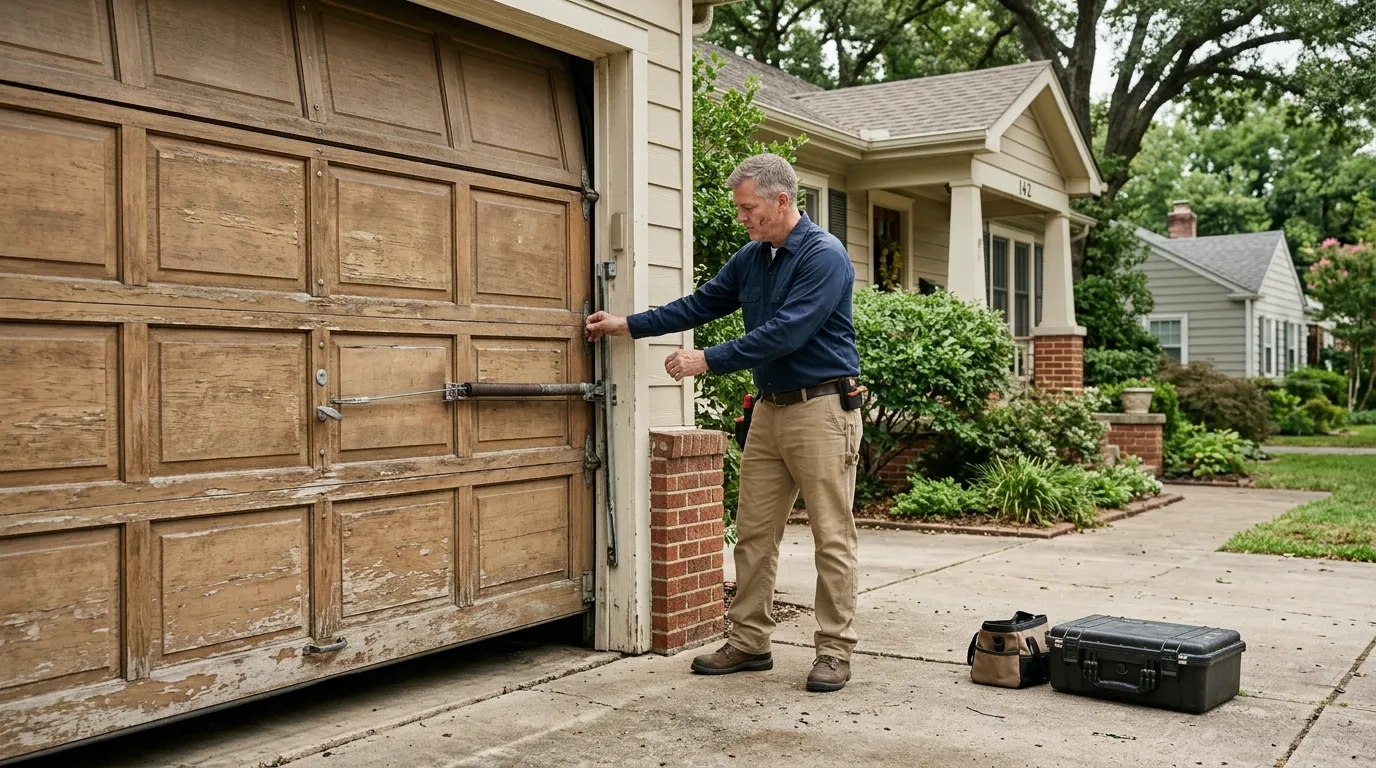
Most houses in the Richardson service area were built between 1973 and 2013, with the median build year landing around 2001. That's a long span, and it means the garage door in front of you could be original hardware from the 1970s or a builder-grade steel door from the early 2000s. The climate band here is moderate heat, not the kind of sustained triple-digit swings that crack panels outright, but enough seasonal expansion and contraction over 20 to 40 years to work springs and hinges loose.
With 45,046 owner-occupied houses across the service area, a lot of these doors have never been touched since the day the house closed. That's the difference between a door that needs one part and a door that needs nearly everything. Knowing roughly when your house was built tells us more about what's behind that door than looking at the paint ever will.
A door doesn't age on a calendar - it ages on cycles, weather, and whether anyone ever lubricated a hinge. But the build era narrows down what kind of hardware we're dealing with before a truck even leaves the yard.
What Most People Get Wrong
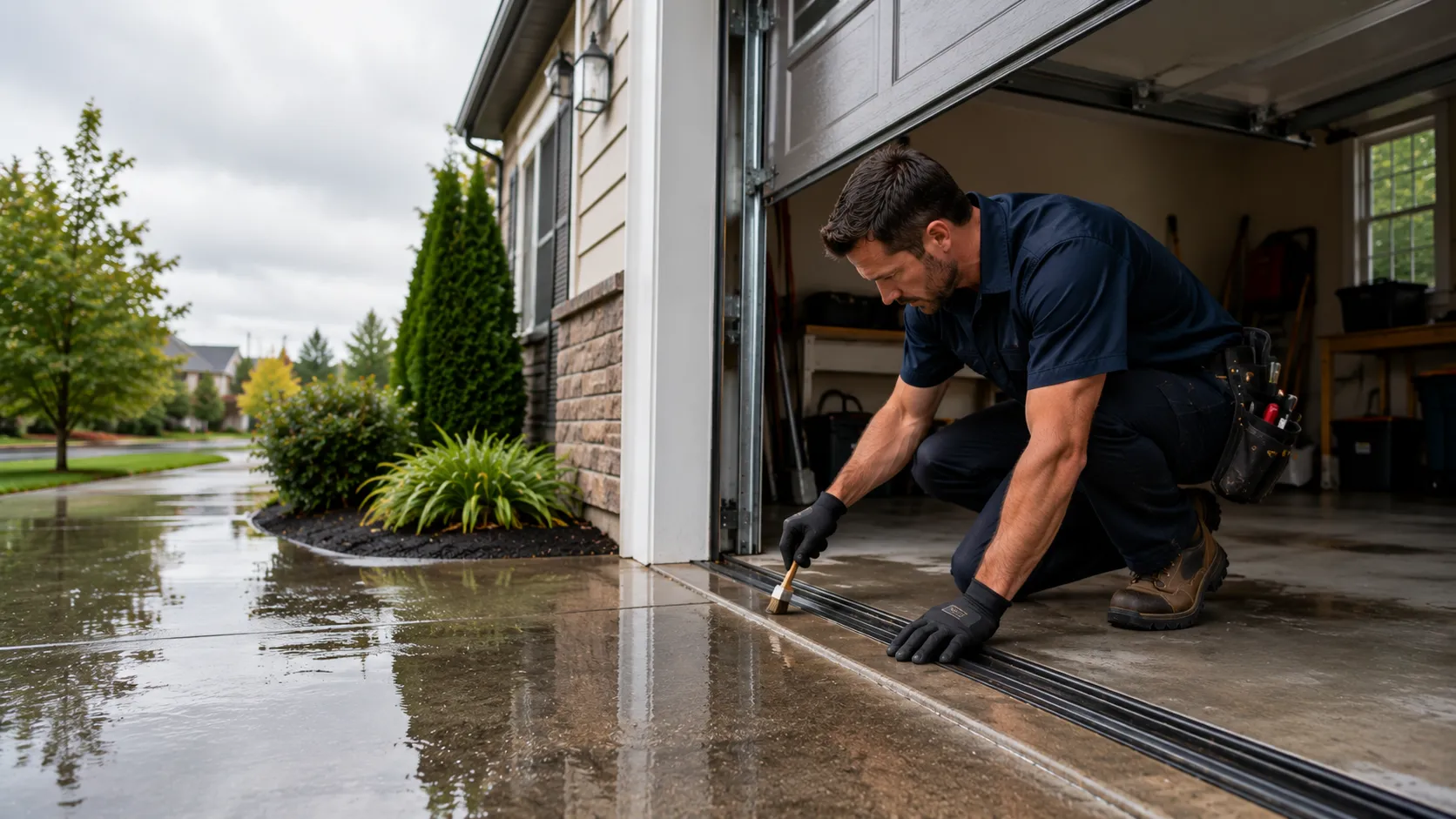
The instinct is to assume an old door is a lost cause, or the opposite, that any door still opening is fine. Neither holds up. With median household income at $131,139 across this area, plenty of owners can afford a full replacement and default to it the first time a spring goes, even when the door itself - the panels, the track, the frame - has decades of service left in it.
Others let a door limp along because it 'still works,' when what's actually failing is a small part that's about to take the opener motor down with it. The age of the house tells you what to expect, not what to do. A door original to a house built in the mid-1970s and a door original to a house built in 2005 fail differently, and the fix isn't the same.
Treating every old door as a write-off wastes money on a replacement that wasn't necessary. Treating every working door as fine wastes a motor that was trying to warn you for months.
The Problem
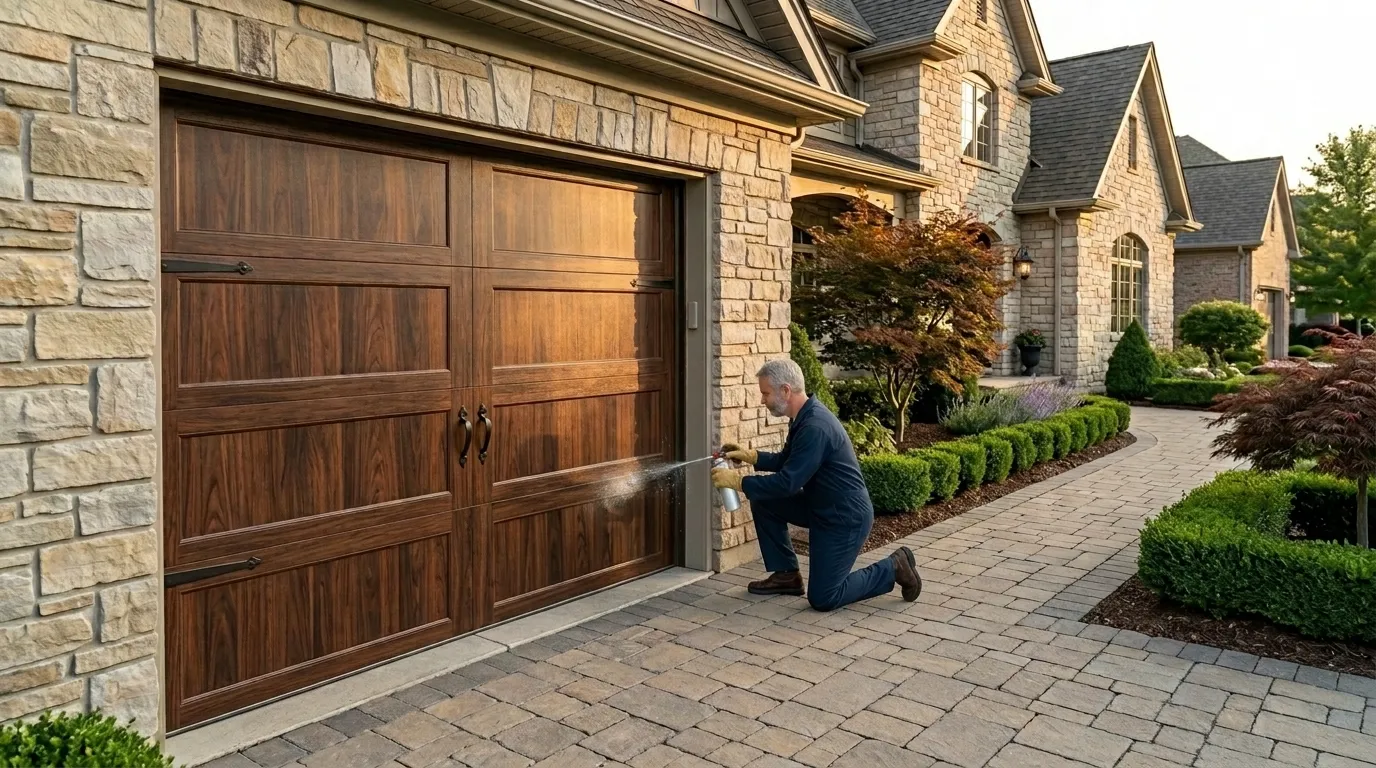
Houses built before the late 1980s in this area often still run doors on hardware nobody stocks new anymore - extension springs wound to older specs, or track bent just enough from age that a new opener fights it every cycle. Houses from the 1990s and 2000s, which make up most of the stock given the 2001 median build year, usually have steel sectional doors and standard torsion springs - parts we can get and match without guesswork. The problem isn't age by itself.
It's whether the door's hardware generation is still supported by parts anyone carries. A door built the same year a house closed in the 1970s is a different job entirely from one closed in the mid-2000s, even if both look about the same from the driveway. Skipping that distinction is how a homeowner ends up paying for a full replacement when a $60 spring conversion would have solved it, or paying for a repair on a door whose rails were already rusted through underneath the paint.
What to Check
Before you call anyone, look at three things. First, the springs: torsion springs mounted horizontally above the door with a stationary cone bolt visible at each end are standard sectional hardware and easy to source. Older extension springs running along the horizontal track, stretched with pulleys and a safety cable, point to a door older than the median 2001 build year here and worth a second look before anyone replaces parts blind.
Second, the bottom panel: check for rust bloom or wood rot where the panel meets the slab, common wear on doors that have sat through 20-plus years of this area's humidity swings even without severe heat extremes. Third, opener age versus door age: a newer opener bolted to a door original to a 1970s build is often the real mismatch, not the door itself. One thing worth saying plainly: if the structural rails are bowed or rusted through, no amount of new hardware fixes that, and we'll tell you to replace rather than take the job.
How We Can Help
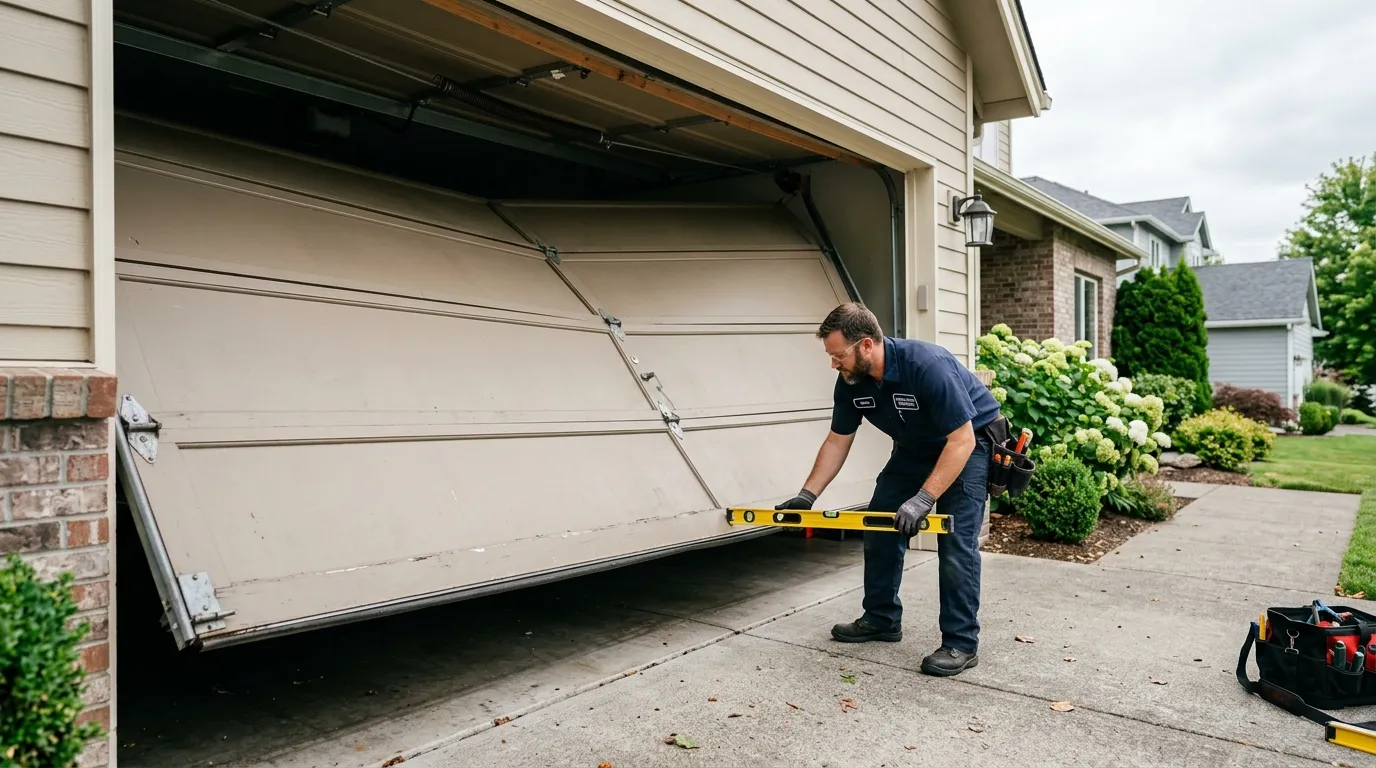
Garage Door Repair
Springs, cables, tracks, rollers, and openers fixed by a tech who explains the problem before touching anything.
Learn more →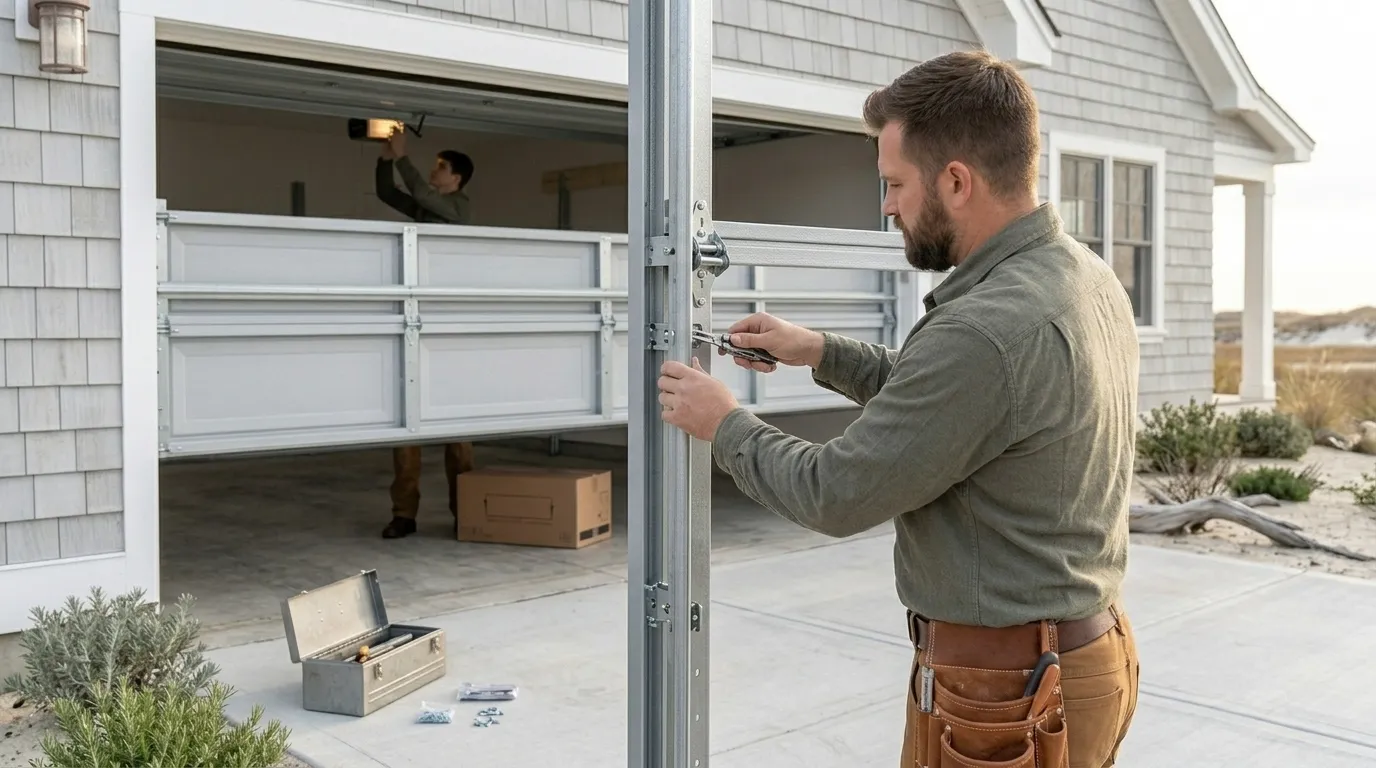
Garage Door Installation
New sectional doors sized and installed for the housing stock actually built in this area.
Learn more →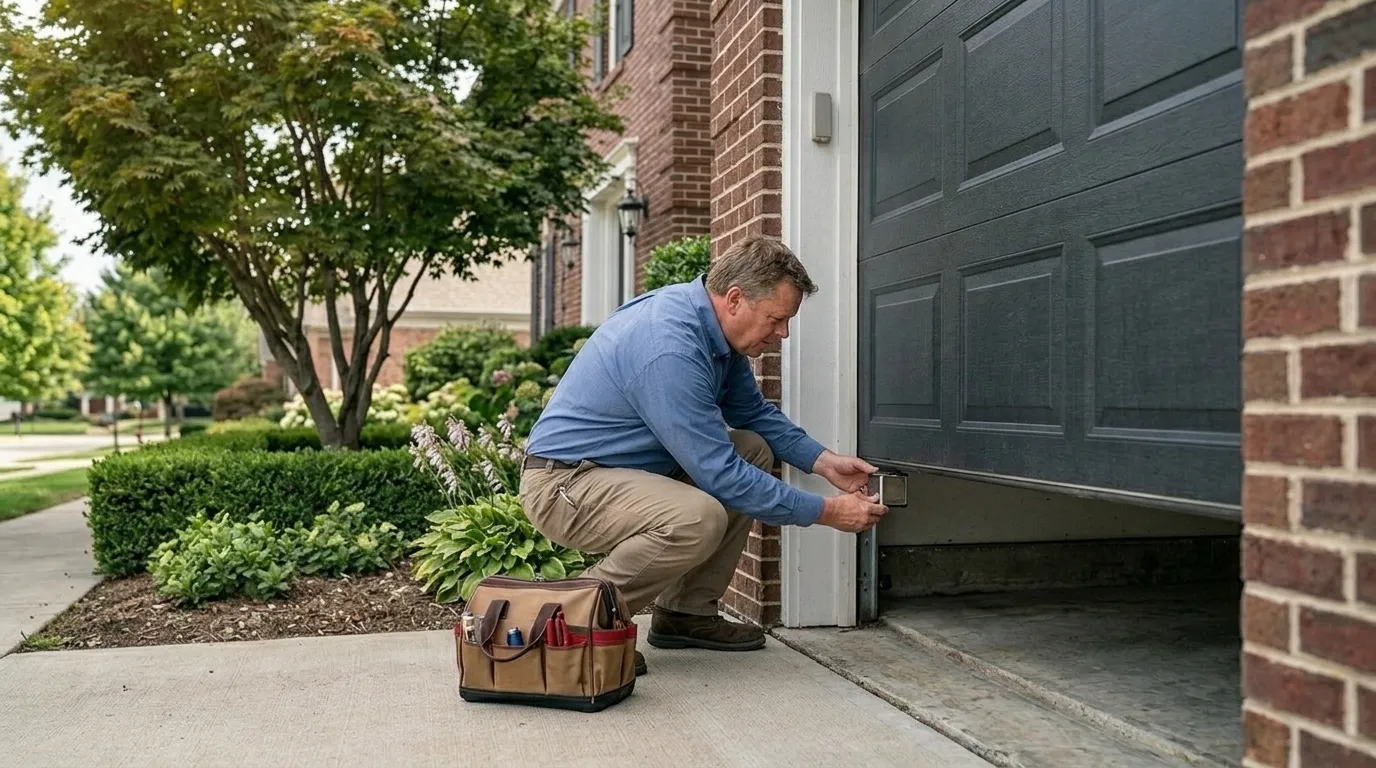
Garage Door Service
Tune-ups, lubrication, and safety checks that catch a small problem before it becomes a service call.
Learn more →Frequently Asked Questions
Is it worth fixing a garage door original to a 1970s Richardson house?
Usually yes, if the rails and frame are sound - the springs and rollers are the parts that wear out, not the structure. We check the frame first. If it's solid, a hardware update on an older door often costs less than replacing panels that still work fine after decades.
How do I know if my springs are the older extension type?
Look above the door. Torsion springs sit on a single horizontal bar centered over the opening. Extension springs run along the horizontal tracks on each side, stretched with a pulley and cable. Extension-style setups usually point to an older door, more common in the earliest houses in this service area.
My opener is new but the door is old - is that a problem?
It can be. A newer opener paired with an original door built decades earlier is a frequent mismatch - the motor is rated for hardware lighter or better-balanced than what's actually on the door, so it strains every cycle. Matching spring tension to the opener usually solves it.
Have a Door That Needs a Second Opinion?
Call and describe what it is doing - we will tell you what it likely is.