
Service
Garage Door Repair for Richardson Homes
Springs failing on Richardson's 2000s-era doors? We diagnose and fix torsion spring, opener, and track failures common to homes built 1973-2013 in Richardson, TX.
What Happens When You Call
-
1
Call or Request a Quote
Tell us what the door is doing and roughly how old the house is - that alone points us toward the likely part before a truck leaves.
-
2
On-Site Diagnosis
A tech checks the spring, cables, tracks, and opener in person and tells you plainly what is actually wrong.
-
3
Straight Price, No Surprises
You get a number before any work starts. It covers parts and labor, nothing added after the fact.
-
4
Fixed the Same Visit
Most repairs are done in one trip. If a part needs sourcing, we tell you that upfront instead of guessing.
How We Fix It
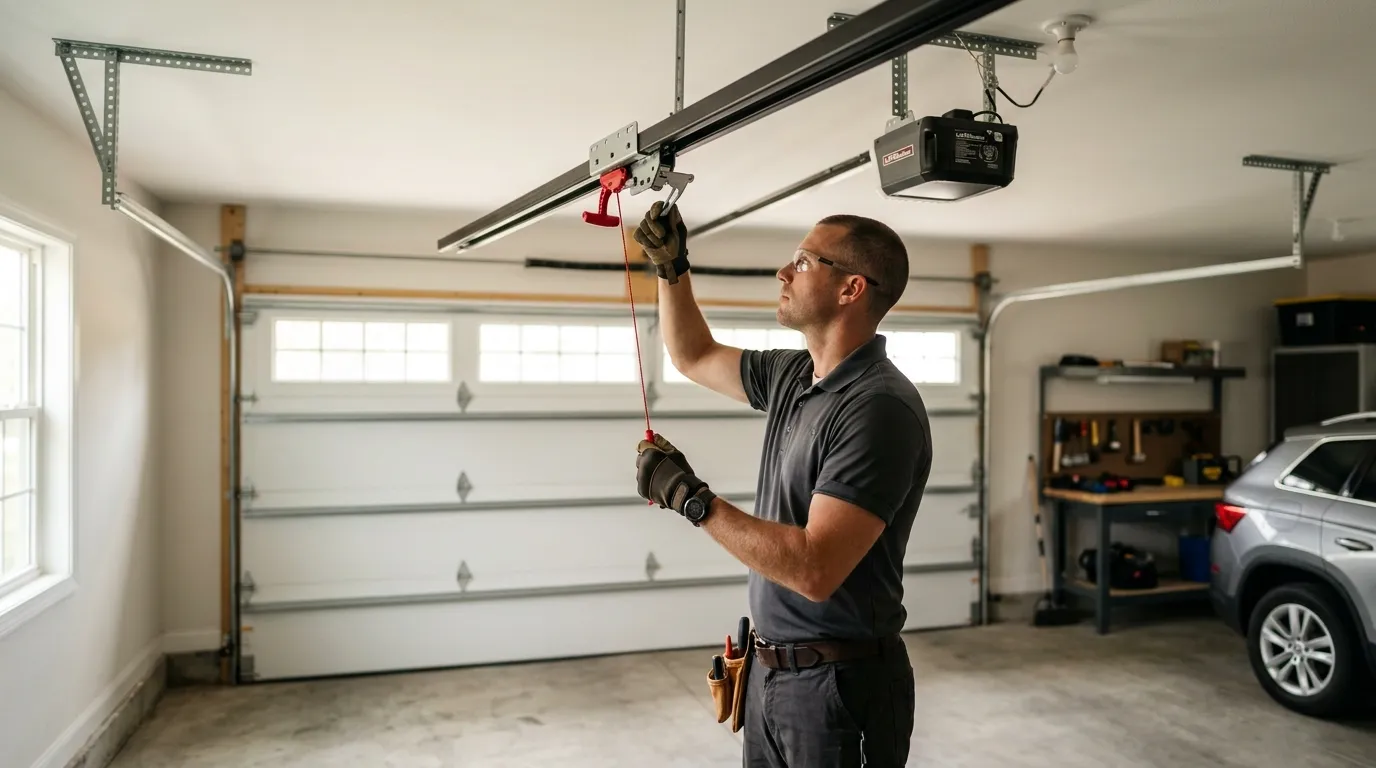
We start by cycling the door by hand with the opener disconnected, because that tells us in thirty seconds whether the problem is a spring, a track, or the opener itself. Most calls in Richardson turn out to be torsion springs that have hit the end of their cycle life, not broken openers - the motor is fine, it's just straining against a spring that quit doing its job.
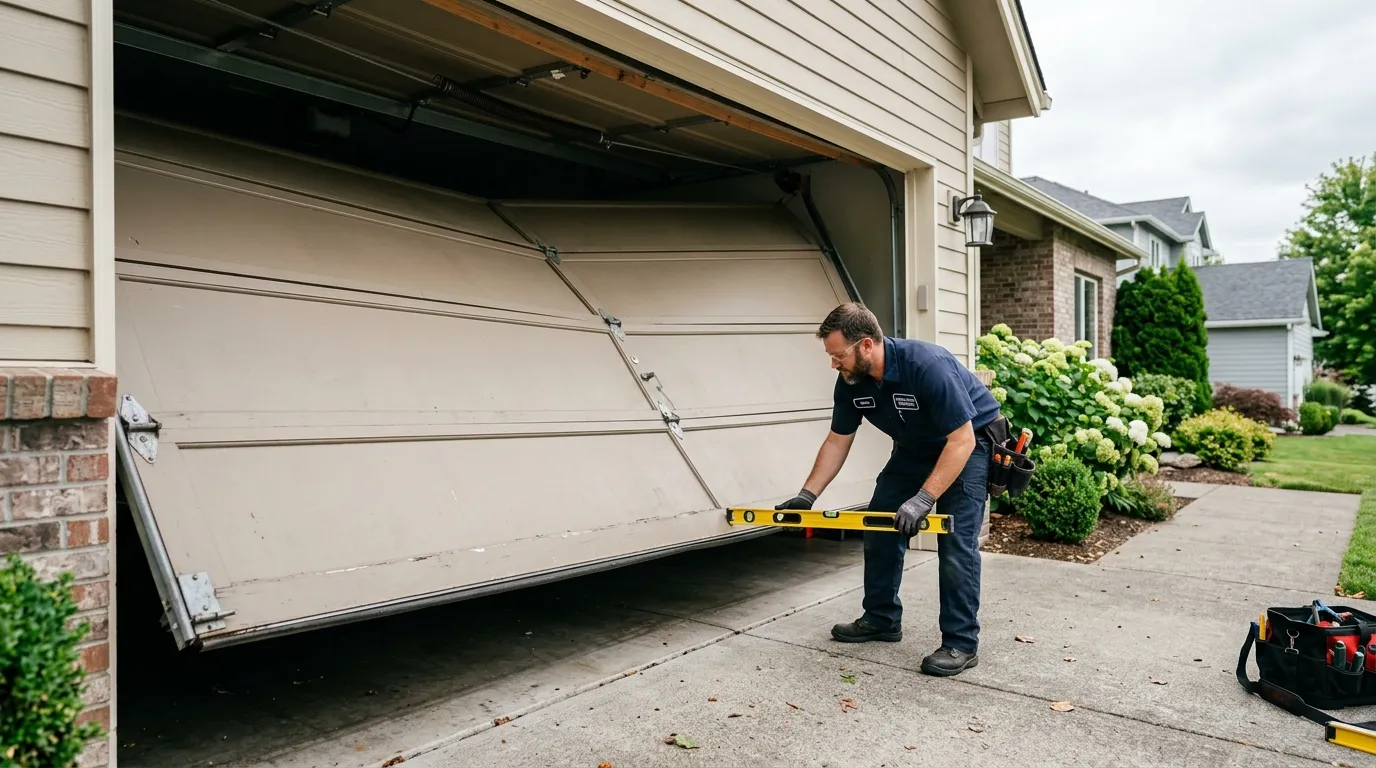
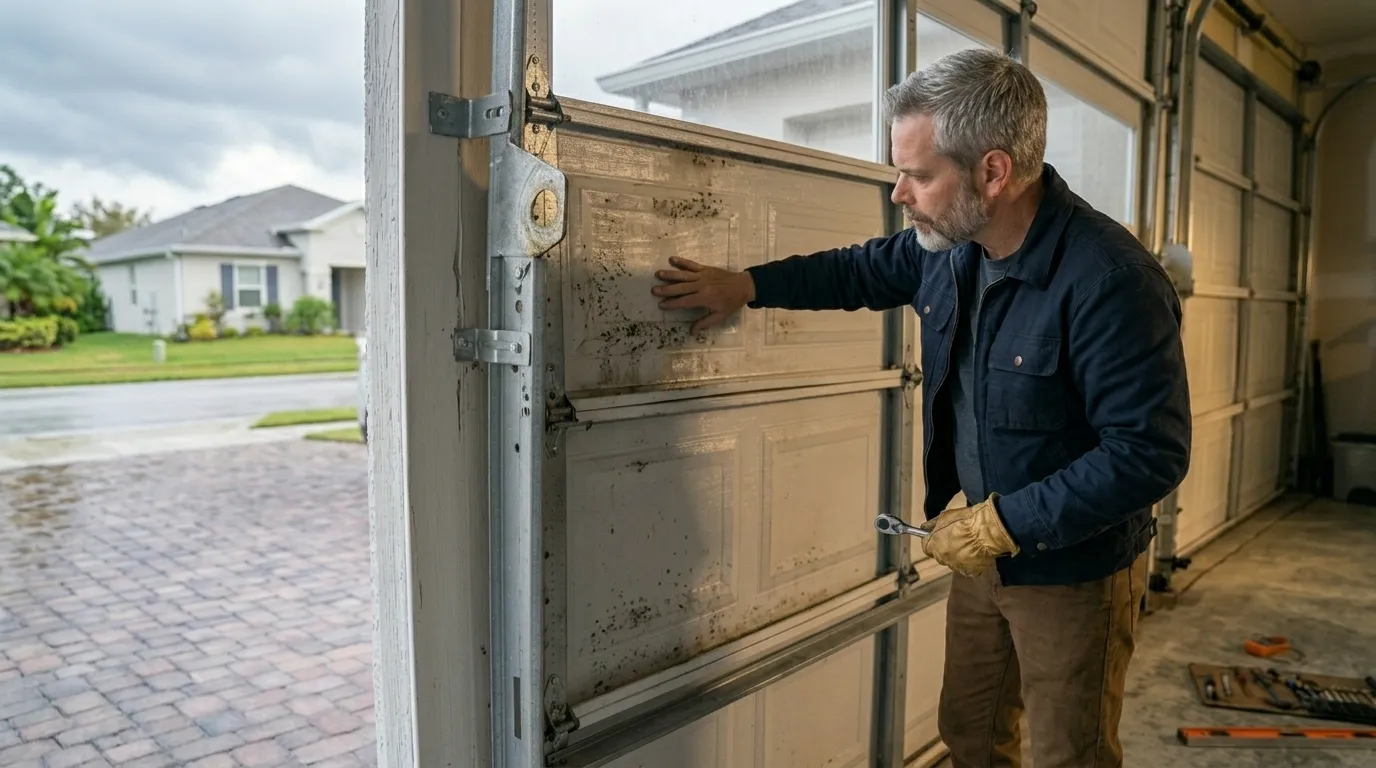
If it's the spring, we match the wire size and wind to what's already on the shaft rather than guessing at a universal size, because doors installed across Richardson's 1973-2013 building boom used a range of spring specs depending on door weight and builder. If it's a track or roller problem, we check the jamb alignment first - on a lot of the area's 2000s-era construction, the framing has settled just enough over twenty-plus years to throw a track out of square, and replacing rollers without correcting that just buys you a few more months.
We don't replace what doesn't need replacing. If a cable has jumped the drum but the drum itself is fine, we reseat the cable and move on. A full opener swap only happens when the logic board or motor has actually failed, not because the remote is acting up - that's usually a battery or a frequency issue, not a reason to sell you a new unit.
The Cost of This Job
We don't have a posted price list to hand you here, and any number we gave without seeing your door would be a guess dressed up as a quote. Torsion spring replacement, cable work, and opener repair all price differently depending on door weight, spring count, and what's actually failed - a single 16-foot door with two springs is a different job than a 9-foot door with one.
What we can tell you: Richardson's household incomes run well above the regional median (median household income here is $131,139), and we see that reflected in what people are willing to spend on doing a repair right the first time rather than patching it twice. A torsion spring is not a part you want the cheapest possible version of - cycle life varies a lot between spring grades, and a bargain spring on a heavy insulated door from the 2000s building wave will often fail again inside a year or two.
One honest limit: if your door is original to a house built in the early 1970s and the track hardware is obsolete, sometimes the repair costs enough that a full door replacement is the better call. We'll say so instead of billing you for a patch that won't hold.
The Symptom
The call we get most from Richardson homeowners starts the same way: the door won't open, the opener motor hums or clicks, but nothing moves - or the door only makes it up a foot before stalling. That's a torsion spring that's lost its tension, and it's mechanical, not electrical, even though it often gets blamed on the opener.
A second common symptom is a door that closes unevenly, dropping faster on one side, or one that reverses partway down on its own. That points to an unbalanced spring system or a roller binding in a track that's shifted slightly out of plumb.
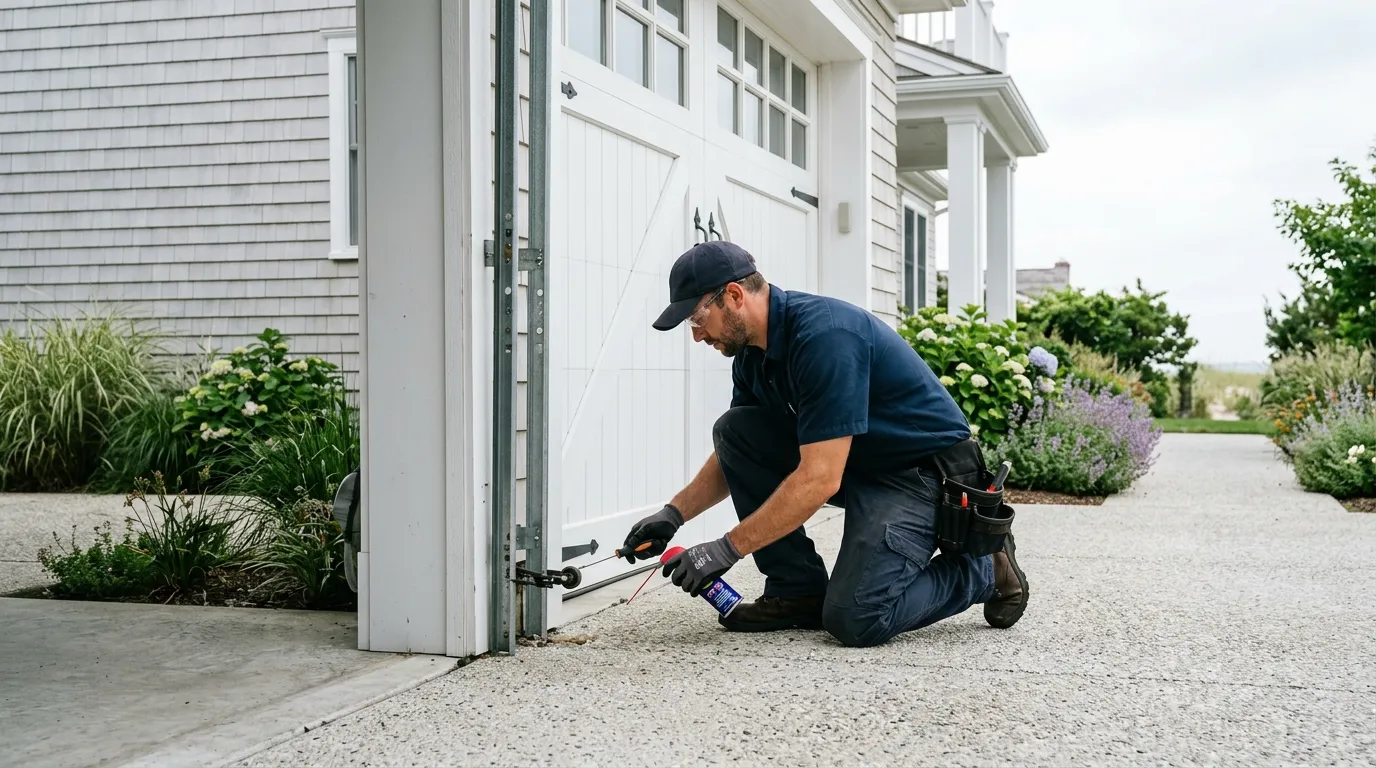
Less dramatic but just as common: a door that's noticeably louder than it used to be, a grinding or popping sound on the way up. That's usually a roller at the end of its life, or a bearing plate that's dried out and never been lubricated. None of these are emergencies in the sense of danger, but a spring under tension that finally lets go is not something to keep pushing past - it's a heavy, fast-moving piece of steel.
Why This Fails Locally
Richardson's housing stock mostly went up between 1973 and 2013, with the median build year landing around 2001, and the majority of the 16 named areas we work in are dominated by that 2000s-era construction. That matters for one specific reason: torsion springs are rated in cycles, typically somewhere around 10,000, and a door that's been opened twice a day for twenty-plus years is exactly the age range where that spring runs out.
That means a big share of the roughly 45,046 owner-occupied houses across this service area are sitting right at or past the point where original hardware starts failing - not because it was installed badly, but because it's simply reached the end of its rated life at the same time across a lot of houses built in the same few years.
The climate here doesn't add the kind of extreme cold-snap stress that cracks springs suddenly the way it does farther north - this area sits in a moderate heat band rather than a harsh freeze zone. So when a spring goes here, it's almost always fatigue from age and use, not a cold-morning snap. That's a slower, more predictable failure, which is actually good news: if your door is groaning or losing balance, you likely have some warning before it fails outright, not zero.
Talk to a Technician Before You Book
Describe what the door is doing and get a straight answer on what it likely needs.
Other Ways We Can Help
Jobs Like Yours
Recent work from this service line.
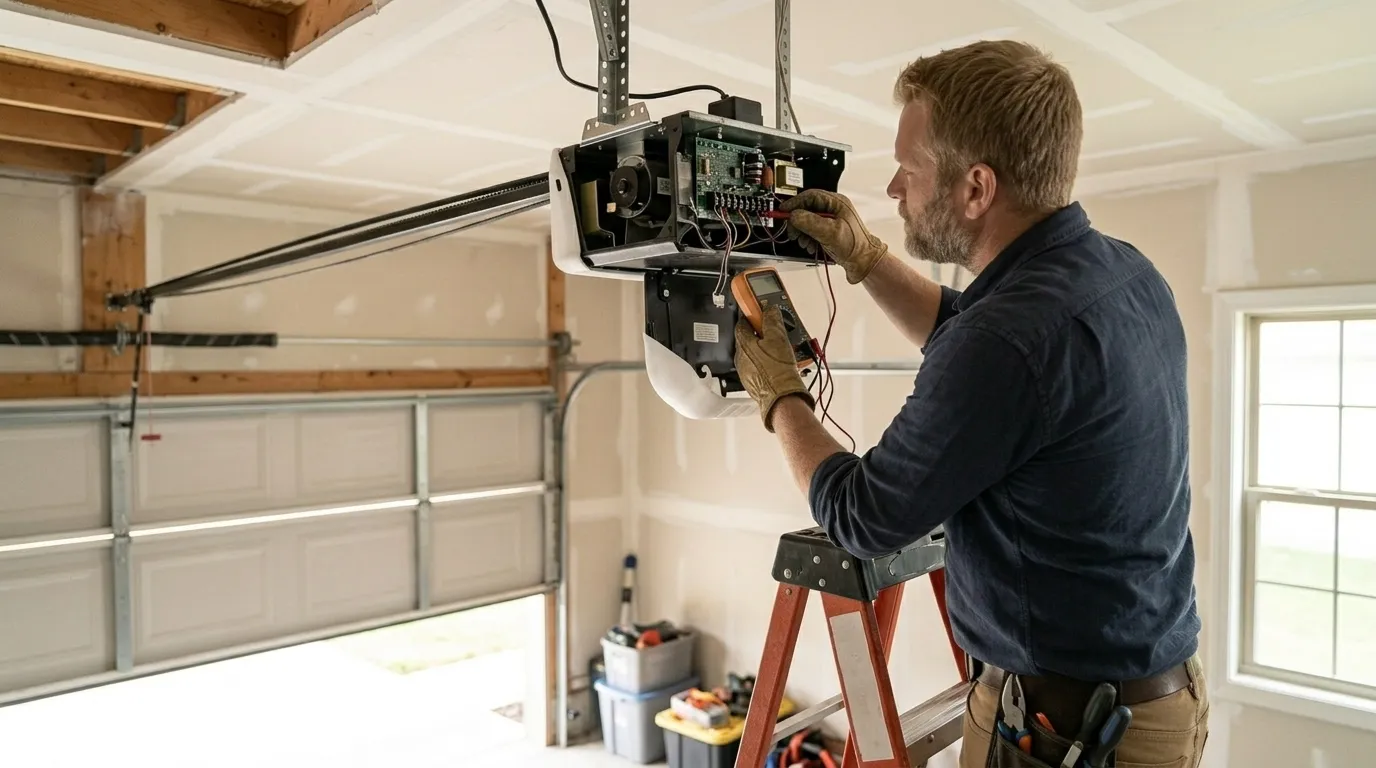
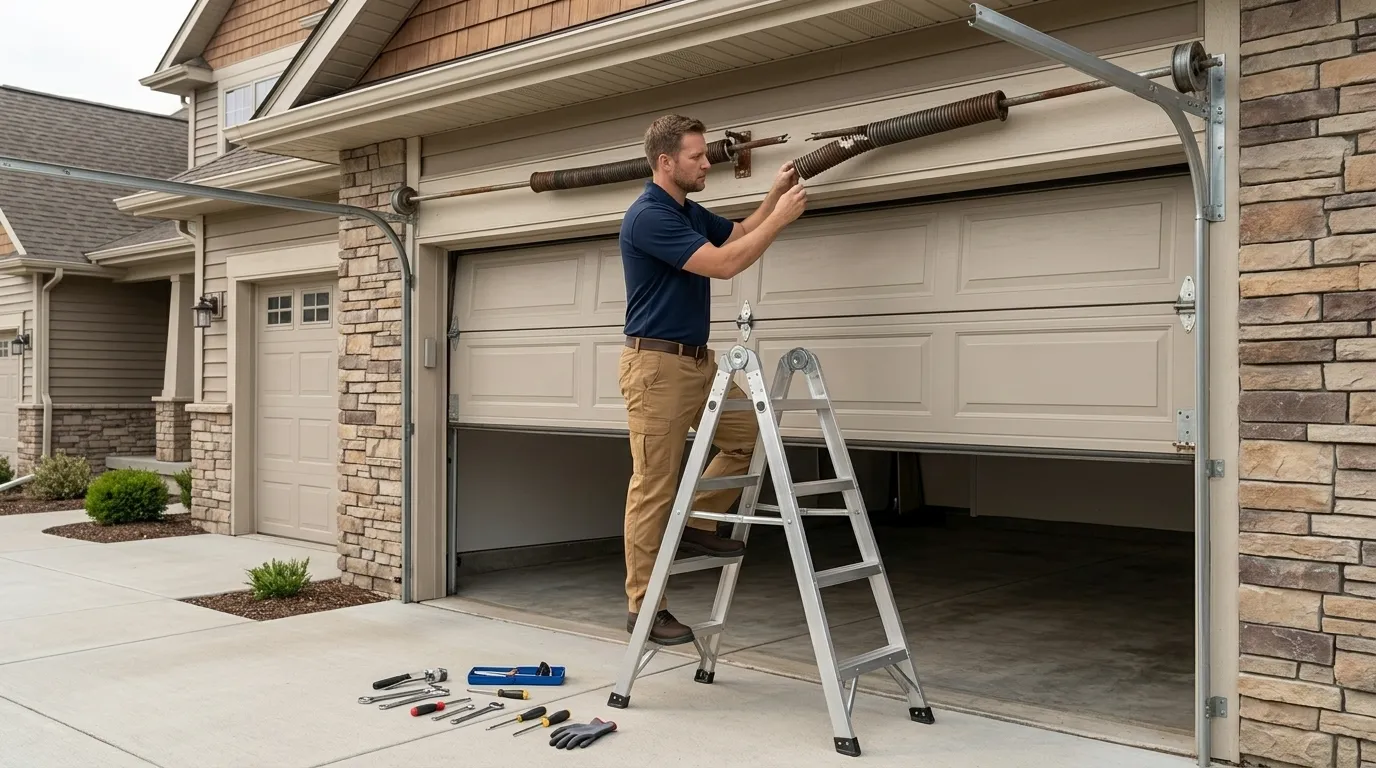
Why Richardson Calls Us
Frequently Asked Questions
Why did my garage door spring break with no warning?
It rarely breaks with zero warning if you were watching for it - most springs get louder or the door starts feeling heavier to lift by hand in the weeks before a full break. In Richardson, the more common pattern is a spring quietly reaching the end of its rated cycle life after 15-20+ years, since so much of the local housing stock dates to the 1973-2013 building years.
Is it normal for my opener to strain but not lift the door?
Yes, and it almost always means the spring, not the opener, is the problem. The motor is doing its job; it just doesn't have enough spring tension helping it lift the weight of the door anymore. Replacing the opener in this case won't fix anything - the new motor will strain the same way within days.
Should I replace my whole door or just repair it?
It depends on the age and condition of the track hardware, not just the spring. If your house dates to the earlier end of Richardson's 1973-2013 building range and the hardware is original, repair costs can climb high enough that replacement is the better value. We'll tell you honestly which side of that line your door falls on.
Need Garage Door Repair for Richardson Homes?
Call now for straight answers on cost and timing.